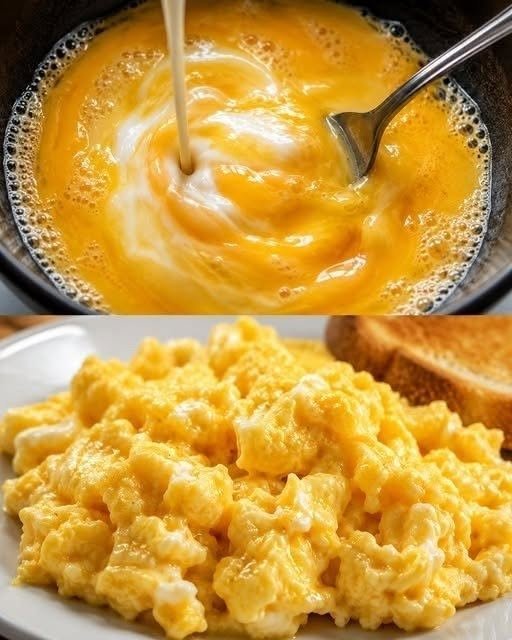
A: It’s optional. Milk/cream adds richness and slows cooking for softer eggs, but purists prefer eggs alone. Try both and decide!
Q: Why do my eggs turn gray/green?
A: Overcooking causes a reaction between iron in yolks and sulfur in whites. Cook low and fast to prevent this.
Q: Can I make scrambled eggs ahead?
A: Not ideally—they’re best fresh. But you can hold them briefly: transfer to a warm bowl, cover, and place over (not in) a pan of warm water.
Q: How do I make restaurant-style “soft scramble”?
A: Use the French method: low heat, constant gentle stirring, and remove while still slightly wet. Finish with cold butter.
Q: Are room-temperature eggs really necessary?
A: Not strictly, but they cook more evenly. If short on time, place cold eggs in warm water for 2–3 minutes.
❤️ Final Thoughts: The Joy of Simple Perfection
Perfect scrambled eggs aren’t about perfectionism. They’re about presence—slowing down, paying attention, and trusting the process.
That first bite of creamy, custard-like eggs isn’t just breakfast. It’s a reminder that the simplest things, done with care, can bring extraordinary joy.
So tomorrow morning, crack a few eggs. Melt some butter. Stir gently. Pull them off early.
And when you take that first bite—soft, rich, perfectly seasoned—you’ll understand.
It wasn’t magic.
It was method.
And now, it’s yours.
🥚 Made perfect scrambled eggs? Share your favorite add-in or serving style below—we’d love to hear how you make them your own
For Complete Cooking STEPS Please Head On Over To Next Page Or Open button (>)
Doctors Reveal That Eating Eggs in the Morning Causes… A Welcome Change in Health Advice

You can also clean tarnished jewelry perfectly at home
I lost 10 kg in a month without dieting! My slimming soup recipe, day and night

Marinated cucumber salad

Are You Able To Answer These Tricky Questions