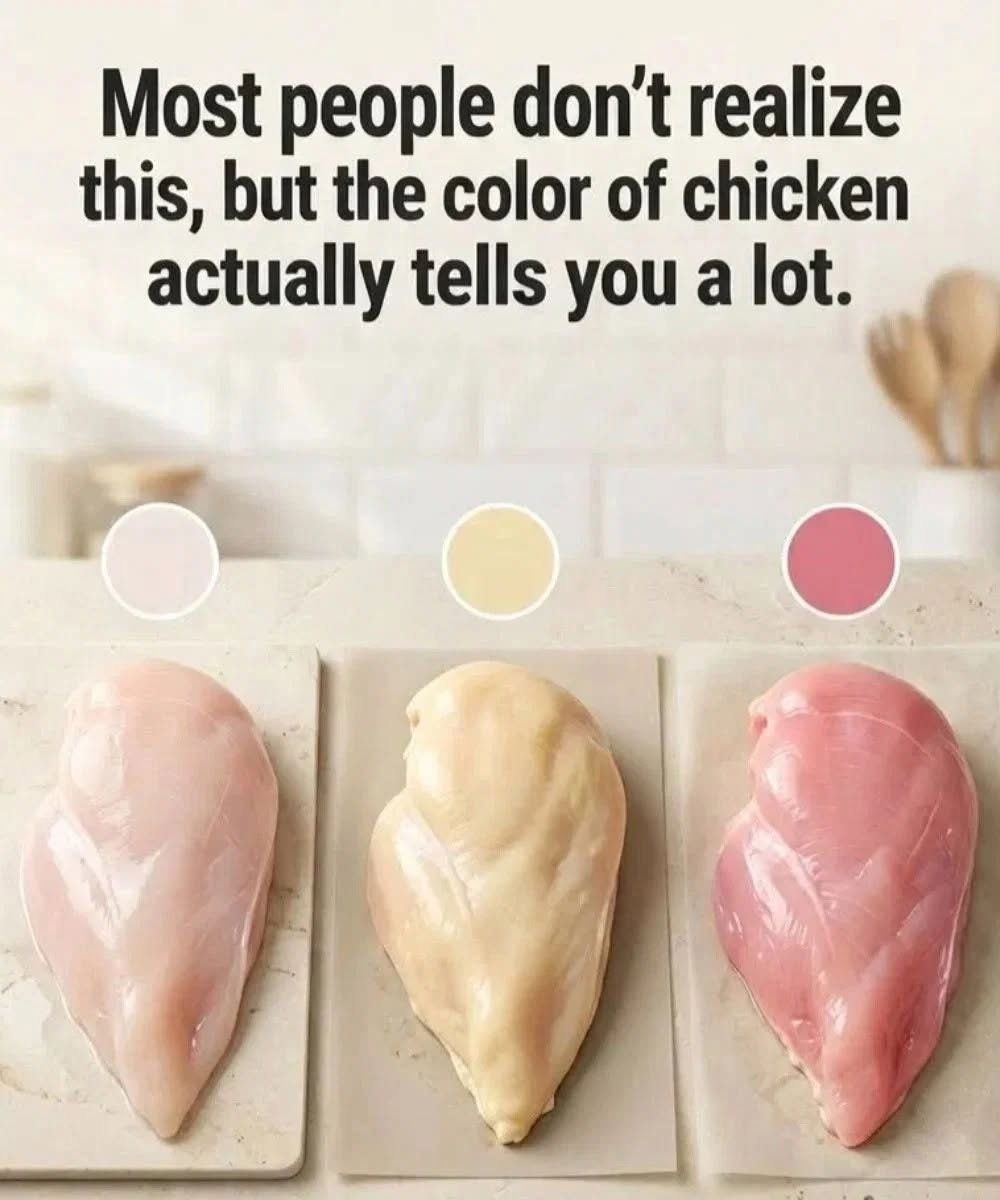
We’ve all stood in the grocery store meat aisle, staring at packages of raw chicken, trying to decide which one to buy. Some are pink, some are pale, some have a slight yellow tint, and others look almost white. Most of us grab the one that looks “freshest” based on instinct—but do we really know what that color is telling us?
The viral posts that say “the color of chicken actually tells you a lot” are onto something. The color of raw chicken can reveal important information about its freshness, handling, and even the diet of the bird. But there’s also a lot of misinformation out there—so let’s separate fact from fiction and give you the full picture.
What Does the Color of Raw Chicken Actually Mean?
The color of raw chicken is influenced by several factors, including the bird’s age, diet, exercise, and how the meat has been handled after processing. Here’s what different colors can indicate.
1. Pinkish-White: The Most Common and Normal Color
Most raw chicken you’ll find at the grocery store is a pale pinkish-white. This is the color of healthy, properly processed chicken. It indicates that the bird was young (typically around 6–8 weeks old) and that the meat has been handled correctly.
What it means: This is your standard, good-quality chicken. It’s fresh and safe to eat, provided it’s within its use-by date and has been stored properly.
2. Yellowish Tint: Fat Content or Diet
Some raw chicken has a slightly yellow tint, especially around the skin and fat. This is completely normal and often a sign of a healthy diet.
What it means: Chickens that are allowed to forage outdoors and eat a diet rich in corn, marigold petals, or other natural pigments will develop yellow-tinted fat and skin. This is often seen in pasture-raised or free-range birds. It’s a sign of a natural diet—not spoilage.
3. Deep Pink or Reddish: Younger Birds or Bruising
Sometimes raw chicken has a deeper pink or reddish color. This can occur for a few reasons:
Younger birds have thinner, more translucent skin, which can make the flesh appear redder.
Bruising can occur during processing or handling, leading to localized red or purple areas.
Myoglobin (a protein in muscle tissue) can cause a reddish color, similar to beef.
What it means: A deep pink or reddish color is usually harmless, especially if it’s consistent throughout the meat. However, large areas of bruising or discoloration may indicate rough handling and could affect texture.
see continuation on next page
For Complete Cooking STEPS Please Head On Over To Next Page Or Open button (>)
Garlic Parmesan Fried Lamb Chops

Dump a whole bag of frozen raw strawberries in the baking dish with 4 other ingredients and get a dessert so incredible your family will be fighting over the last scoop

Place a Tablespoon on Any Plant at Home: What to Expect
Slow-Roasted Beef Pot Roast with Caramelized Onions and Carrots
No more bland watermelons! Here’s a sure-fire visual guide to finding the sweetest fruit at the market